Compliance
Beginner's Guide to Italy's Market Regulations for New Traders
The first time you set up a stall in an Italian piazza, it is rarely the big legal questions that catch you out. It is the small ones. The identity badge you were meant to wear. The price list that has to be visible from the front of the table. The receipt you must issue even for a two-euro punnet of tomatoes. Italy’s rules for market traders are not unreasonable, but they are layered: municipal, regional and national, with tax obligations sitting on top of all of it. What follows is a walk through the core obligations in roughly the order you will meet them.
Step one: an identity the state can see
Before you sell anything regularly, you need a partita IVA from the Agenzia delle Entrate, with an ATECO code that matches what you actually do. Selling fruit and vegetables, clothing, or handmade ceramics are different codes, and picking the wrong one creates problems later when you apply for authorisations or file your first return.
Most new traders start as a ditta individuale — a sole proprietorship — because it is cheap and quick to open. You register with the Camera di Commercio through the ComUnica procedure, normally within thirty days of starting activity, and you receive a REA number alongside your registration. That number appears on invoices, contracts and often on the municipal paperwork for your pitch.
There is a genuine exception for one-off selling: a single flea market before Christmas, or a stand at a friend’s village festival, can sometimes fall under occasional trading. The trap is assuming “occasional” covers a weekly market. It does not. If the activity is repeated, organised and profitable, the tax authority will treat it as a business.
A commercialista will cost you a few hundred euros a year and save you considerably more in corrections. Given that registration errors follow you through every later application, this is money well spent.
Authorisation to trade in public space
Trading on a public street or square is commercio su aree pubbliche, governed by national rules and, in practice, by your Comune and region. You need an authorisation before you unload a single box.
There are two broad forms. Trading su posteggio means holding an assigned, numbered pitch in a specific market — the model most people picture. Trading itinerante means moving between locations, which suits smaller towns and hamlets but comes with its own route and timing rules.
The application goes to the Comune’s Suap (the single business desk). Pitches are usually allocated through a public procedure, with points awarded for things like trading experience, local residence or the range of goods offered, and concessions typically run for several years. Waiting lists can be long, so ask early about interim options:
- Temporary or unassigned pitches that are free on the day.
- One-off authorisations for festivals, fairs and mercati straordinari.
- Sub-entering an existing concession, where the rules allow it.
Once authorised, you must display the tessera di riconoscimento — a photographic badge showing your name, the authorisation details and the goods you may sell. Inspectors from the Polizia Locale do check, and trading outside your authorised categories is treated as unauthorised selling. If you sell by weight, remember that your scales must undergo the periodic legal metrology verification; an unverified scale is an easy fine to avoid.
Food, drink and anything that touches a customer
If you sell food, the paperwork roughly doubles. You must notify your local ASL before starting, put in place a HACCP self-monitoring plan, and hold a food hygiene training certificate. The plan does not need to be a work of literature — a short, honest document describing how you keep things cold, clean and separated is what inspectors want to see.
Traceability matters. Keep supplier invoices for everything you sell, and label products in Italian with ingredients, allergens, origin where required, and a shelf life. Pre-packaged goods need correct labels even if you did not make them: the trader who sells them is responsible for what the customer reads.
The same instinct applies to cosmetics, toys and electrical items — safety marking, Italian-language instructions and warnings are your responsibility, not the manufacturer’s alone. Where food, hygiene or product safety is involved, take advice from your ASL or a qualified consultant rather than relying on forum posts.
The till, the receipt and the tax year
Italian retail runs on traceable payments. You will need an electronic cash register (RT) that transmits your daily takings to the tax authority, and you must issue a receipt or fiscal document for each sale. Invoicing is electronic for business customers, and consumers may request an invoice too.
Small traders often use the flat-rate regime (regime forfettario), which simplifies accounting and applies a fixed percentage to your revenue instead of tracking every deductible expense. It is available up to a revenue ceiling of 85,000 euros. Above that, ordinary accounting applies. Your commercialista should confirm which regime fits before your first sale, because switching later is possible but rarely painless.
On top of income tax, remember the local charge for occupying public space — the canone unico patrimoniale — which is billed by the Comune and calculated on the size of your pitch and the days you use it. Keep the payment receipts with your business records.
Conduct rules: prices, claims and returns
Consumer law applies to a market stall exactly as it applies to a shop. Prices must be clearly displayed, inclusive of VAT, and legible before the customer commits. “From €5” on a rail of mixed items is not enough unless the individual prices are also visible.
Advertising must be truthful. The Autorità Garante della Concorrenza e del Mercato can act on misleading claims about origin, composition or health benefits, and “Made in Italy” is heavily protected — do not use it loosely. Separately, if you collect customer details for a newsletter or loyalty scheme, data protection rules apply: say what you will do with the data, and do not add people to lists they did not agree to join.
One point that surprises newcomers: sales made face to face on a stall carry no cooling-off period. The fourteen-day right of withdrawal applies to distance and off-premises sales, so if you also sell online, that changes your obligations — returns, refunds and clear pre-contract information all become part of your routine.
A short starting checklist
- Confirm your ATECO code and open the partita IVA.
- Register with the Camera di Commercio and note your REA number.
- Ask the Comune for the market regulation document and the next allocation procedure.
- Notify the ASL and complete food hygiene training if you sell food.
- Buy or configure an RT till and test the daily transmission.
- Set up price displays, labels and the tessera badge before day one.
- Keep every supplier invoice, canone payment and receipt in one folder.
Your first month, realistically
Start with the tax and registry steps, because the Comune will ask for that documentation as part of your application. Then approach the Suap in person — a short conversation about which markets have space is worth more than an hour of searching. While you wait for a permanent pitch, take one-off festival authorisations to learn how the trading rhythm works and to build the trading history that scores points in future allocations.
Finally, treat your paperwork as part of the stall, not an afterthought. Ten minutes at the end of each market day — takings reconciled, receipts filed, stock noted — keeps you inspection-ready and makes the annual return a small task rather than a crisis. Rules that feel fussy in week one become background noise by the end of the season, and that is exactly when they stop costing you money.
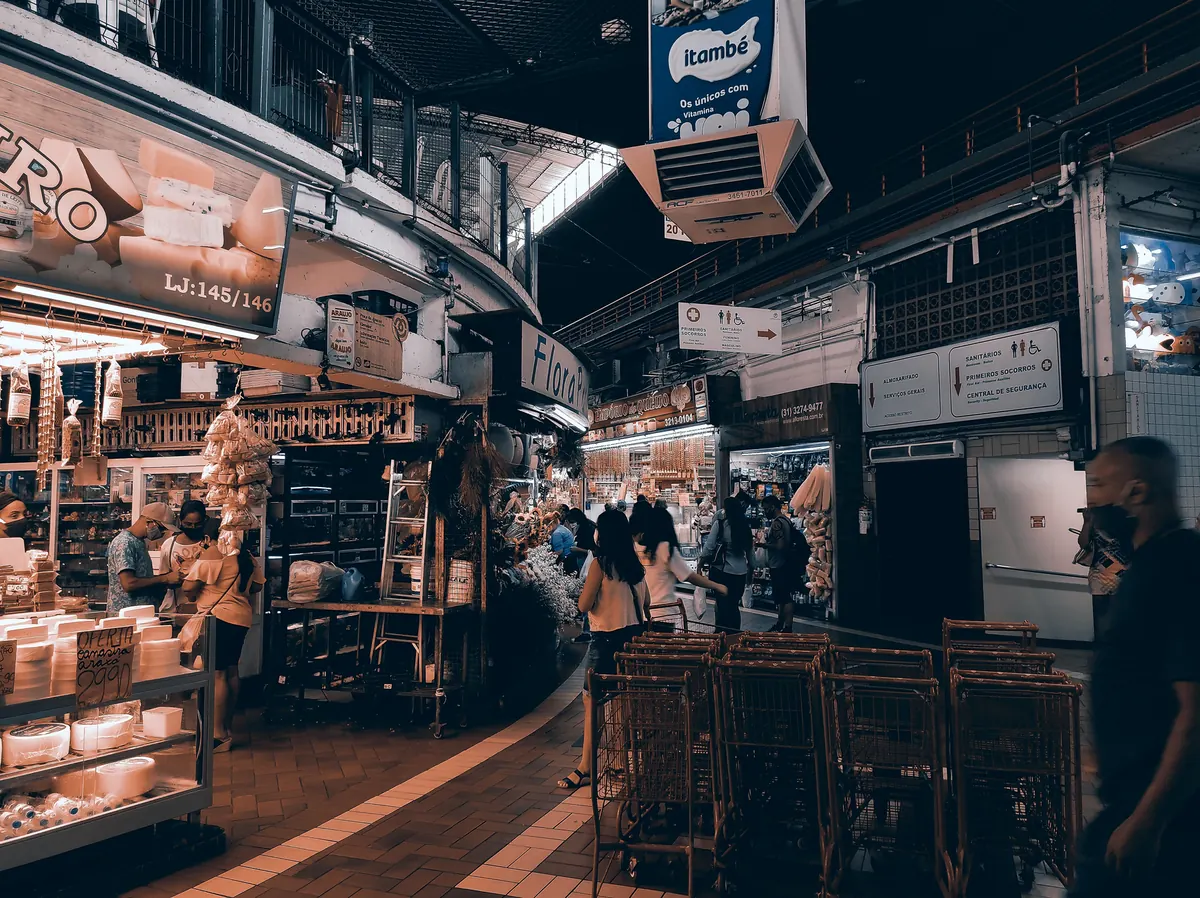
Photo: Andre Moura / Pexels