Legal Documents

Legal Documents Every Market Vendor Should Keep On Hand
Saturday morning, half past seven, the market is still waking up. Someone in a municipal jacket stops at your stall and asks to see your trading authorisation. What happens next depends almost entirely on what is in the plastic box under the counter.
Vendors rarely get into trouble because they have no licence. They get into trouble because the licence is in a drawer at home. A document that exists but cannot be produced when someone asks for it creates the same problem as a document that doesn't exist at all.
What follows is a working checklist, not a legal textbook. The exact names change from one country, region and municipality to the next, and so do the details of what must be displayed versus what must simply be kept. Use this as the shape of your file, then confirm the specifics with your local market office.
Your Trading Authorisation and Pitch Papers
The first tab in the folder should hold whatever gives you the right to stand where you stand.
In most systems that means two separate things, and vendors sometimes blur them together. One document confirms that you may trade as a business. The other confirms that you may trade in this particular place, on this particular day.
What belongs in this tab
- The trading authorisation or business registration covering itinerant or market trade, including any annex listing the goods you are allowed to sell.
- The pitch allocation, concession or booking confirmation for the market, with the reference number clearly visible.
- Receipts for pitch fees and public-space occupation charges — the last two or three are usually enough.
- Sector-specific permissions: food handling registration, alcohol, plants, live animals, second-hand goods.
- Written authorisation for anyone who sells on your behalf.
Two practical notes. Check your authorisation for the product categories it lists — adding a new line of goods is one of the most common reasons a routine check turns into a problem. And ask your market office whether they accept a legible scan or a digital copy. Many do now, but the officer standing at your stall at seven in the morning is not the person who made that decision.
Identity, Business Registration and Insurance
The second tab proves who you are and who carries the risk if something goes wrong.
Photo identification for yourself and for anyone working the stall. Keep staff copies with their written consent, and store them carefully: identity documents are personal data and should not sit loose in a glove compartment.
Then the business registration extract, your tax or VAT identification, and — if you trade through a company — the document naming you as its representative.
And the insurance certificate. Read it before you file it. Check that the policy period is current, that the activity described matches what you actually do, and that the trading name and address are right. Insurers issue fresh certificates at renewal, so replace the old one rather than sliding the new one behind it.
If you sell by weight or measure, add the verification certificate for your scales. If you handle food, add whatever health registration your local authority issues. None of this is exotic. It is the paperwork that answers the three questions a spot check is really asking: is this business real, is it insured, and is the person in front of me entitled to be here?
Contracts Worth Keeping in Writing
Contracts are the documents vendors keep most informally, and the ones that cause the most expensive arguments.
You do not need a lawyer to draft a storage agreement for a garage or a standing order with a grower. You need one page that says who, what, how much, for how long and how either side ends it, signed and dated by both. A confirmed email thread beats nothing, but a signed page beats an email.
- Pitch or sub-lease agreements, including short seasonal arrangements.
- Rental or lease contracts for storage, a depot, a van or refrigeration equipment.
- Supplier agreements, standing orders and consignment terms.
- Delivery notes, invoices and the traceability records that accompany food products.
- Employment contracts, collaborator agreements and declarations for occasional helpers.
- Your own terms of sale, deposit receipts and order confirmations.
Two habits pay off. Write the end date on the front of the folder, because contracts expire quietly. And keep the version you actually operate under: when a supplier raises prices mid-season, file the written confirmation. Verbal variations are the source of most disputes that never needed to happen.
Notices, Certificates and Registers
Some documents are for the file. Others are for the customer, and a few are for both.
Food businesses carry the heaviest load: registration with the competent authority, a written food safety plan built on HACCP principles, allergen information for everything sold loose or pre-packed, and traceability records showing where each batch came from. Temperature logs matter if you handle chilled or frozen goods, and they need filling in — an empty form is worse than no form, because it shows the system exists on paper only.
Then the display obligations: prices visible on or near the goods, unit prices for pre-packed products, your returns policy if you have one, and the signs your municipality requires at the stall. Certificates to keep current include scales verification, electrical safety checks for equipment, waste disposal contracts or receipts, and fire safety documentation where your setup calls for it. If you collect customer details for orders or a loyalty list, keep a short privacy notice you can show.
A small tip that saves an evening: photograph every notice you are required to display, once, while it is correct. When the sign fades or the wind takes it, you can reprint it the same night instead of trying to remember the exact wording.
Storing It So You Can Find It in Thirty Seconds
A file that takes ten minutes to search is a file that will fail you at the worst moment.
Build one master folder, tabbed in the order of the sections above. Keep the originals in a fireproof, watertight case at home or in the office and carry a complete copy in the van: paper in a plastic wallet, and scans on your phone in a clearly named folder. Name scans with the date first — 2025-03-pitch-allocation — so your phone sorts them the way you think.
- Originals stored safely, working copies with you.
- One naming convention, used every single time.
- A cloud backup that a partner or family member can also open.
- A written note of each reference number, so a lost document can be reported and replaced quickly.
The most useful page in the whole folder is a one-page index. Columns: document, reference number, issuer, issue date, expiry date, where the original lives. Keep a copy at the front. If something does go missing, request a duplicate before the next market day rather than after — most issuing offices can reprint, and having the reference number makes that conversation much shorter.
A Fifteen-Minute Routine That Keeps the File Alive
Documents don't go out of date all at once. They drift: an address changes, a van is replaced, an employee leaves, a new product line arrives, a policy renews with a new certificate. The file you built in March is quietly wrong by September unless someone looks at it.
Pick one day a month — the first Monday, the last market of the month, whenever it fits — and spend fifteen minutes on four questions:
- Has anything changed? Address, vehicle, staff, products, trading name.
- Does the index still match what is in the folder?
- What expires in the next ninety days? Set a reminder sixty days before each date.
- Is anything missing, faded or illegible?
Then leave it alone for another month. The goal isn't a perfect archive. It's being able to put your hand on the right paper in the time it takes an inspector to finish asking the question — and getting back to the customer waiting at the counter.
One last caution: requirements genuinely differ by country, region and municipality, and a small error can cost you a trading day. Where a rule is unclear or a document is disputed, ask your market office or a local adviser who works with traders. That conversation is almost always cheaper than the fine.
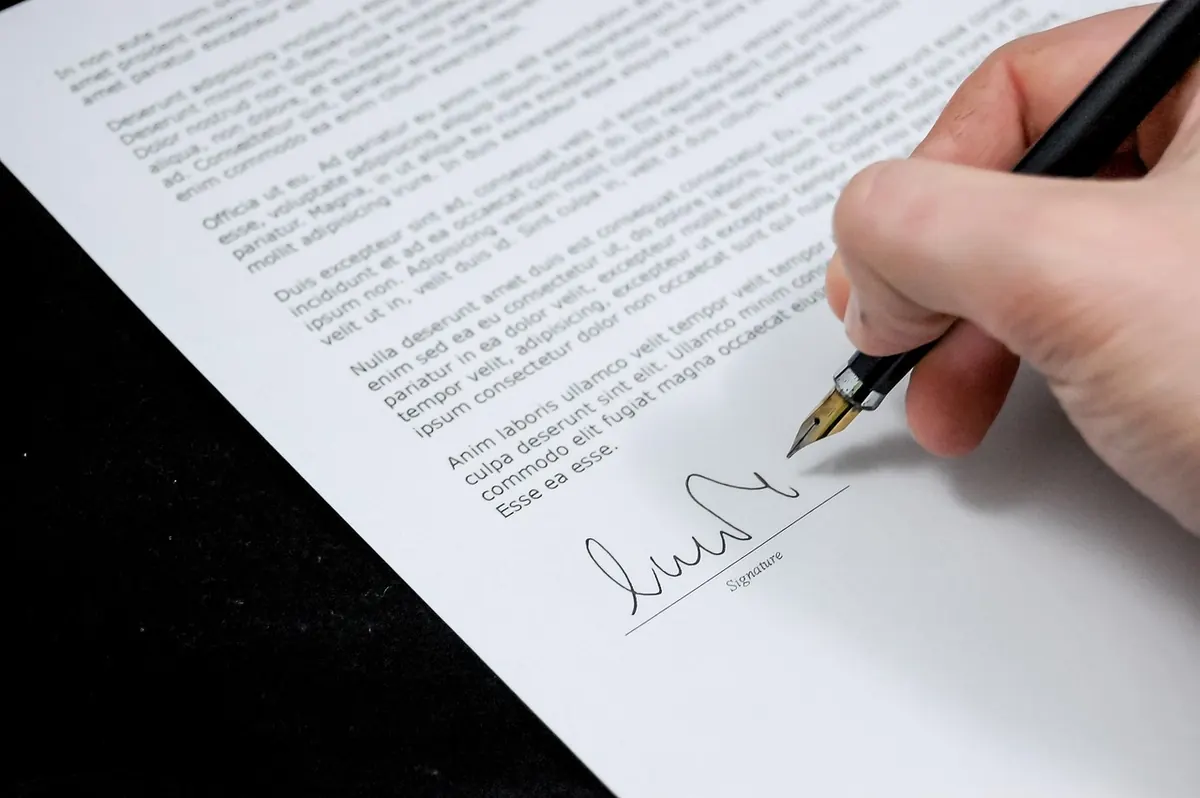
Photo: roma1880 / Pixabay